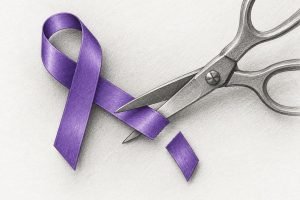
For decades, survivors were told it wasn’t abuse unless it left a mark. This summer, two more states said otherwise.
There is a sentence almost every STAR has heard, in one form or another: “But he never hit you.” It might have come from a relative who couldn’t understand why you left, or from a police officer standing in your kitchen, or from the judge reviewing your petition. The sentence lands like a verdict, because for most of legal history, it was one. If the harm didn’t leave a visible mark, the law had no name for it — and what the law cannot name, it cannot see.
But the tides are changing. Earlier this month, Mica’s Law, South Carolina’s bid to make coercive control a crime, died in committee before it could reach a vote — and the outrage that failure generated helped push legislation across the line in two other states. They are not the first to move: by 2024, some eighteen states and territories already recognized coercive control in some form, most of it in family court and protective-order law, only a small handful as an outright crime. What is changing now is the pace and the reach. Slowly, unevenly, coercive control — the patterned dismantling of a person’s freedom that sits at the heart of nearly every Toxic Abusive Relationship™ — is being written more deeply into the legal definition of domestic violence.
New Hampshire names the trap
On July 14, New Hampshire Governor Kelly Ayotte signed House Bill 1576, which broadens the state’s legal definition of domestic violence to include coercive control, the deliberate isolation of a victim from their support system, and the nonconsensual sharing of private intimate images.
The same week, the governor signed a companion measure expanding access to protective orders for survivors of sexual assault regardless of their relationship to the person who harmed them. As Pamela Keilig of the New Hampshire Coalition Against Domestic and Sexual Violence put it: “A survivor’s ability to obtain protection should not depend on their relationship with the person who assaulted them.” Protection tied to the harm, not to the paperwork of the relationship — that is what trauma-informed law looks like.
Colorado starts the clock
On August 12, Colorado’s House Bill 26-1309 takes effect, and it may be the most consequential state law of its kind yet. Colorado had already let its courts weigh coercive control at the edges — but this law moves it to the center. The state now defines domestic violence to include both coercive control and economic abuse, and it spells out the behaviors in plain statutory language: isolating a partner from their support system; monitoring and tracking their movements; controlling their access to money, work, or education; degradation; threats and intimidation; using the children to surveil or punish.
If you have lived through a TAR, you likely didn’t need a legislature to hand you that list. You could have written it yourself. That is precisely the point — for the first time in Colorado, the law’s description of abuse matches the survivor’s description of it.
When a Colorado court finds that a parent has committed domestic violence under this expanded definition, a presumption now applies: custody with that parent is not in the child’s best interest. The presumption can be rebutted — through completed intervention programs, demonstrated change over time, and evidence a child would be safe — but the starting point has moved. For years, family courts have too often treated coercive control as a “conflict between parents” rather than a danger to children. Colorado just reversed the burden of that doubt, and it placed it, at last, on the shoulders that can carry it.
The road runs through South Carolina
“Mica’s Law,” named after Mica Miller, became a rallying cry for the simple idea that the patterns of control survivors describe are not “drama,” not “a bad marriage,” but a recognized, dangerous form of abuse.
South Carolina has now tried and failed three times to pass that idea into law. Senator Stephen Goldfinch has said he will reintroduce Mica’s Law in 2027 — and this time, the ground beneath the debate has shifted. Every state that writes coercive control into its statutes makes the next state’s “that’s not really abuse” a little harder to say out loud. New Hampshire and Colorado didn’t just change their own laws this summer. They handed South Carolina’s advocates evidence that this can be done, is being done, and works.
That is how this movement has always advanced: not in one sweeping victory, but constellation-style — one light at a time, until the pattern is undeniable. One star is bright; a constellation is unstoppable.
Why a definition can change a life
A legal definition tells a police officer what to write down. It tells a judge what a protective order can rest on. It tells a family-court evaluator that isolation and financial control are findings, not footnotes. And it tells the survivor something no statute drafter may have intended but every STAR will recognize: you were not imagining it. The gaslighting that says “nothing happened to you” loses one of its favorite accomplices when the law itself says otherwise.
Your experience was real before any legislature caught up to it. These laws don’t create the truth of what happened to you — they finally acknowledge it.
There is honesty required here, too: a statute is a beginning, not a cure. England and Wales criminalized coercive control more than a decade ago, and survivors there will tell you enforcement is only as good as the training, resources, and belief behind it. New definitions must be matched by educated courts, funded services, and communities that take survivors at their word the first time. The law learning to see is step one. The system learning to act is the work ahead.
What you can do — wherever you are
If you live in New Hampshire or Colorado, learn what these laws now recognize; if you are supporting a survivor, that knowledge may open doors that were closed a year ago. If you live in South Carolina, Mica’s Law returns in 2027 — your voice, your story, and your calls to legislators are part of how the third failure becomes the first victory. And wherever you live, remember that laws follow culture, and culture is made of conversations. Every time someone says “but there were no bruises” and you answer “abuse doesn’t need them,” the map changes a little more.
And if you are reading this from inside the condition these laws describe — please hear this above everything else: what is happening to you has a name, it is not your fault, and it is not the end of your story. You don’t have to navigate life after abuse alone. TAR Anon® meetings are free, worldwide, and open to anyone healing from a Toxic Abusive Relationship.
Sources
- STAR Network — Coercive Control & Mica’s Law
- NHPR — Ayotte signs bills strengthening protections against domestic and sexual violence (July 15, 2026)
- Divorce.law — Colorado HB26-1309, effective August 12, 2026
- Post and Courier — SC failed 3 times to criminalize coercive control
- WMBF News — Sponsor says he will reintroduce Mica’s Law in 2027 (June 26, 2026)
- Battered Women’s Justice Project — 2024 Coercive Control Statutory Matrix